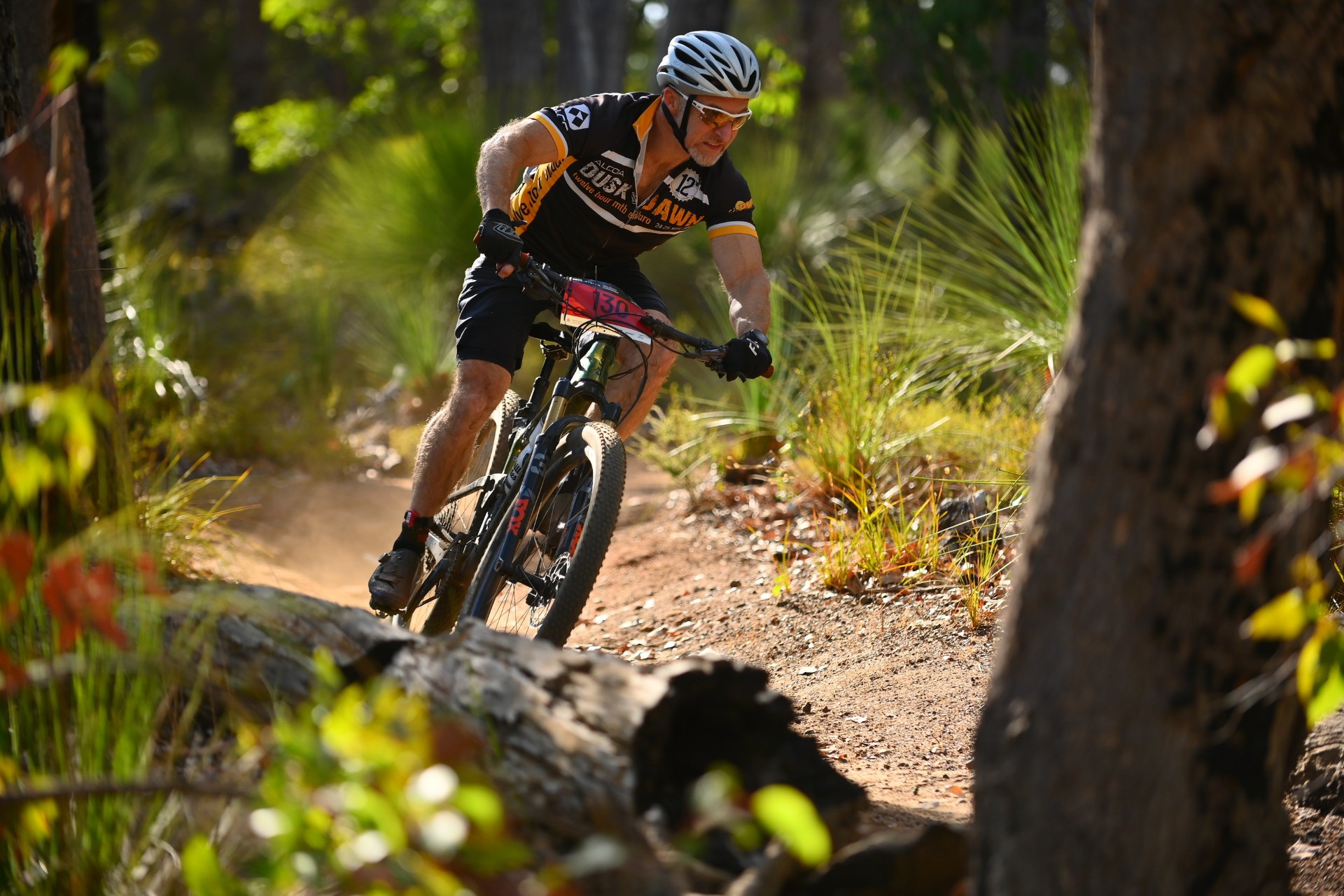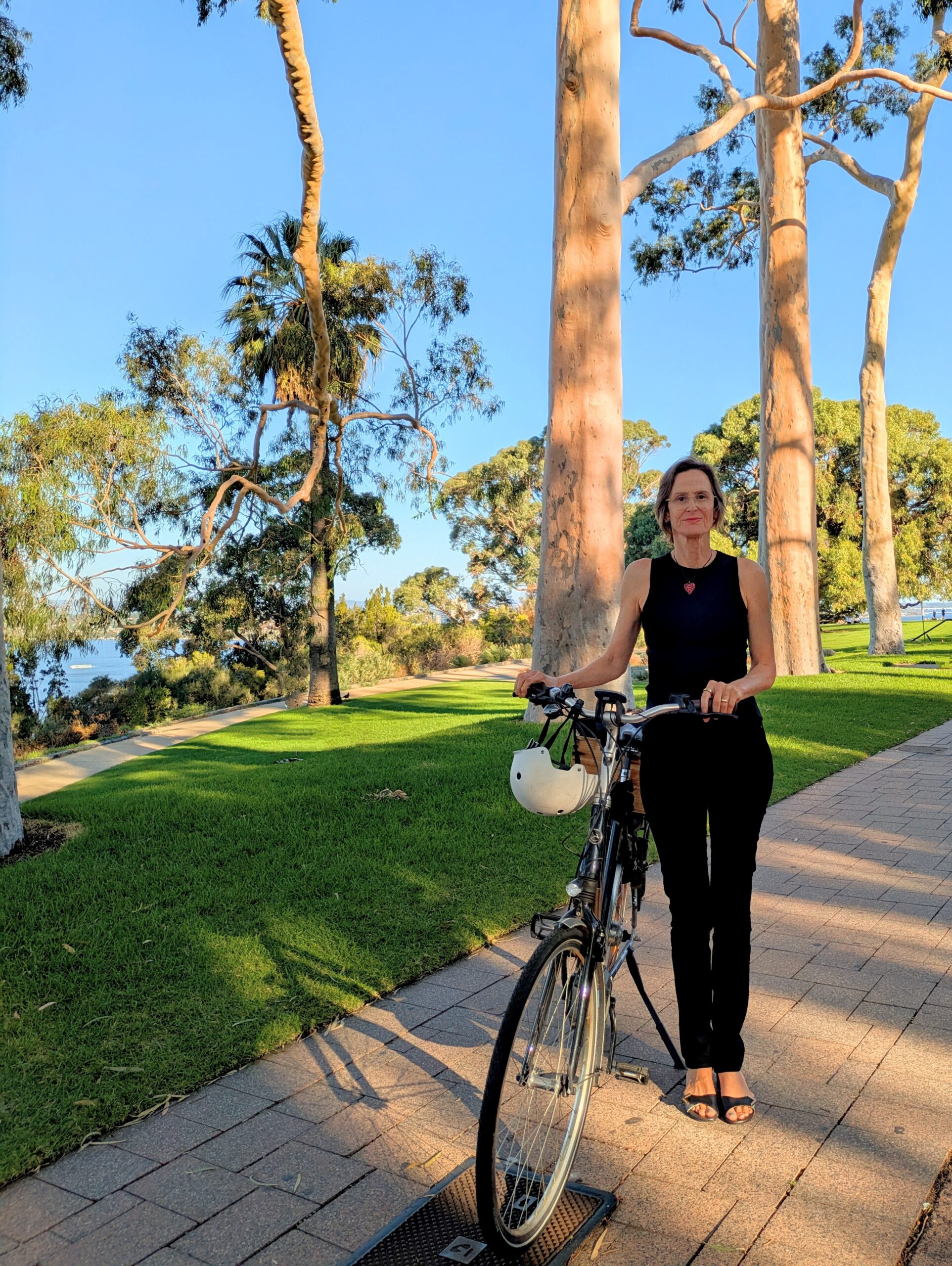

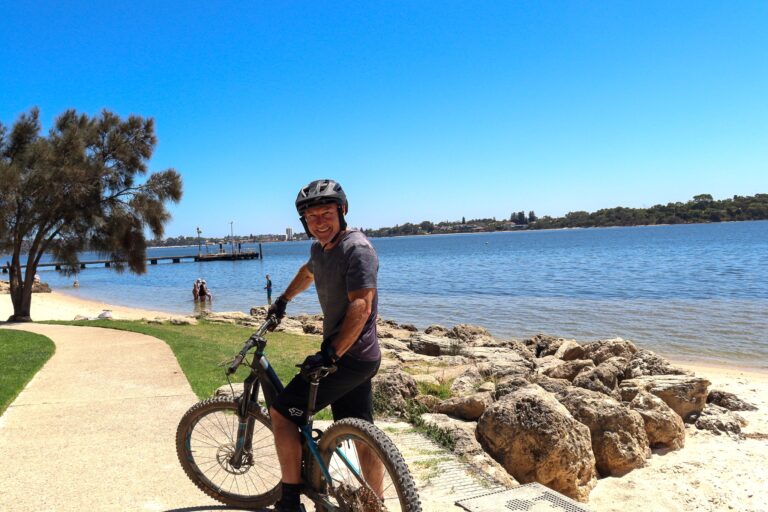
After many years of service on the WestCycle Board and a period as vice-Chair, Tim Roach in January took over the reins after Debbie Millard’s tenure as Chair finished.
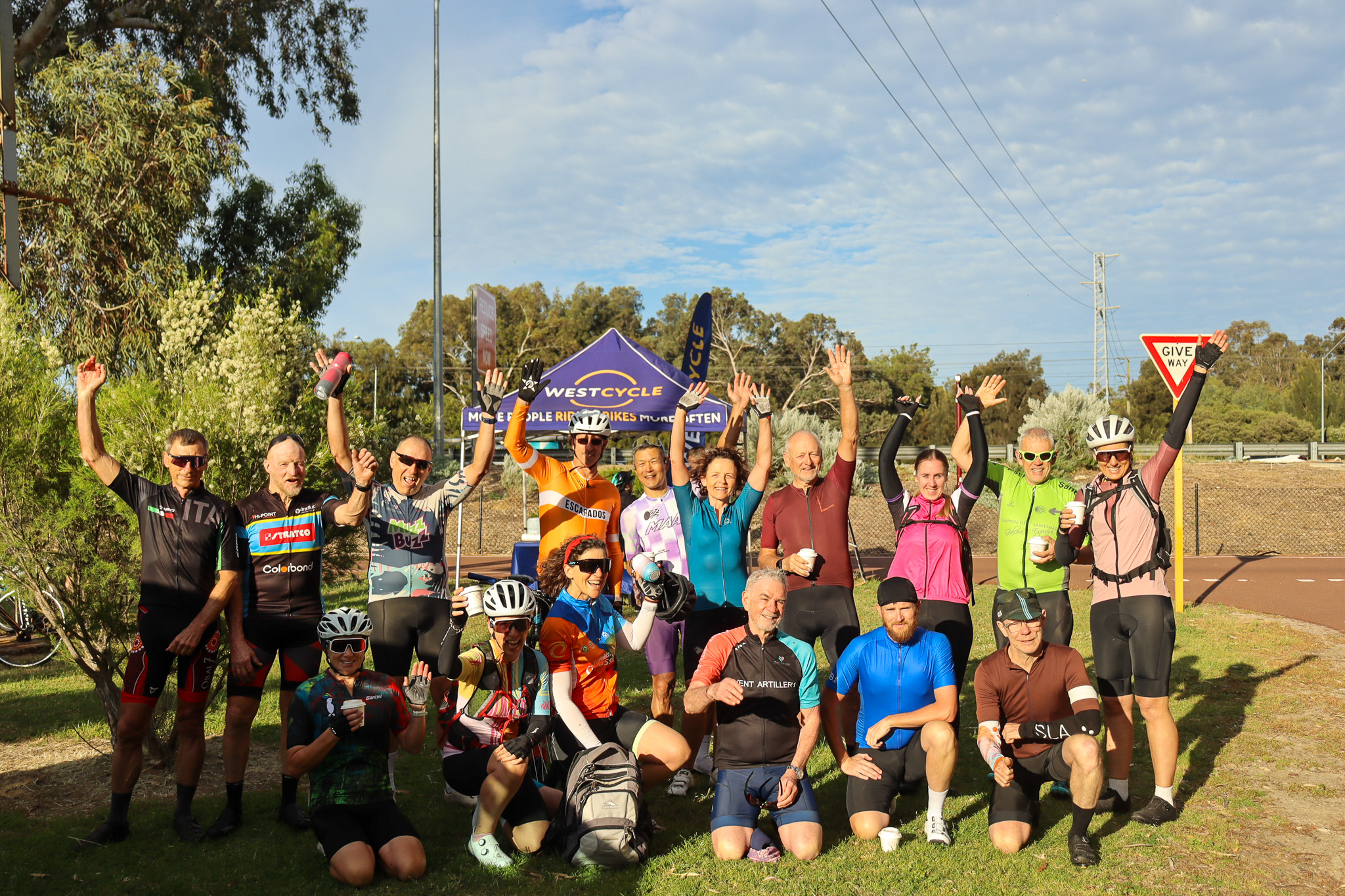
Broadening the WestCycle membership family – especially recreational riders – is a big part of Roach’s vision – as is having a bigger voice at the tables where active transport policy and regulatory decisions are made at local, state and federal level.
“I think I’ve got a slightly different focus areas to Debbie but it will be more an evolution than a revolution,” Roach told us recently. “So I’ve got a real focus on membership – I’ve also got a very strong focus on how we can be an advocate for all riders – be they lycra cyclists, offroad riders, commuters and users of e-bikes and eRideables.”
More members, more clout for riders in WA
In the membership space he’d like to see more of WestCycle’s large social media and subscriber base take up a WestCycle membership, including WestCycle’s free ‘Ride Community’ offering.
“Perhaps awareness of the fact we have a free membership level is not as high as it could be,” Roach said.
“We’ve got paid memberships that come with insurance and a number of other benefits – but I’d be encouraging people to take up free membership, become part of the riding community, sort of become part of the journey, and then maybe later on explore a paid membership.”
“They will get exposed to all the work we are doing including our advocacy work – and that at the same time strengthens our advocacy; makes us more relevant with government. It gives us a bigger base of riders and eRideable users to get opinions from. And the more views we’ve got coming in, the better we can do our job.”
“I think there are way more commuter cyclists, eRideable users and recreational riders than there are serious racers and serious trainers. So I think expanding into that commuter market, that recreational market, is the way to go.”
Local government
The former Assistant Commissioner and General Manager in the public service, currently a consultant and university lecturer, wants to find ways WestCycle can work more closely with local and state government bodies and other agencies.
“We’ve got services that we can provide to local and state government if we could expand our funding base – we could definitely do more with local government and WALGA (WA Local Government Association).”
“For example, we have some really good databases of information – a lot of information about what is safe, what’s not safe, all sorts of data, and we’ve also got some really experienced people in providing advice on Principle Shared Paths and other issues. While we’re not a traditional consultancy, WestCycle is well placed to act as a trusted service partner for local government, providing evidence-based advice, local context and insights to support better outcomes.”
Regional reach, trails successes and challenges
Expanding the riding footprint throughout the State was a key goal of WestCycle’s strategic plan implemented in 2025.
“The regions are a real growth area for riding and for WestCycle – riding in the regions is huge, from recreational riding to commuting, mountain biking and gravel riding,” he said.
“We have some trails that are celebrated and renowned worldwide – the Munda Biddi is a standout example. Some of our other trail networks like Dwellingup, Collie, Margaret River are very well regarded. That’s not an accident. There’s been a lot of investment in them. The whole trail network is world class.”
“..if you build it, they will come. If you maintain it, they will keep on coming.”
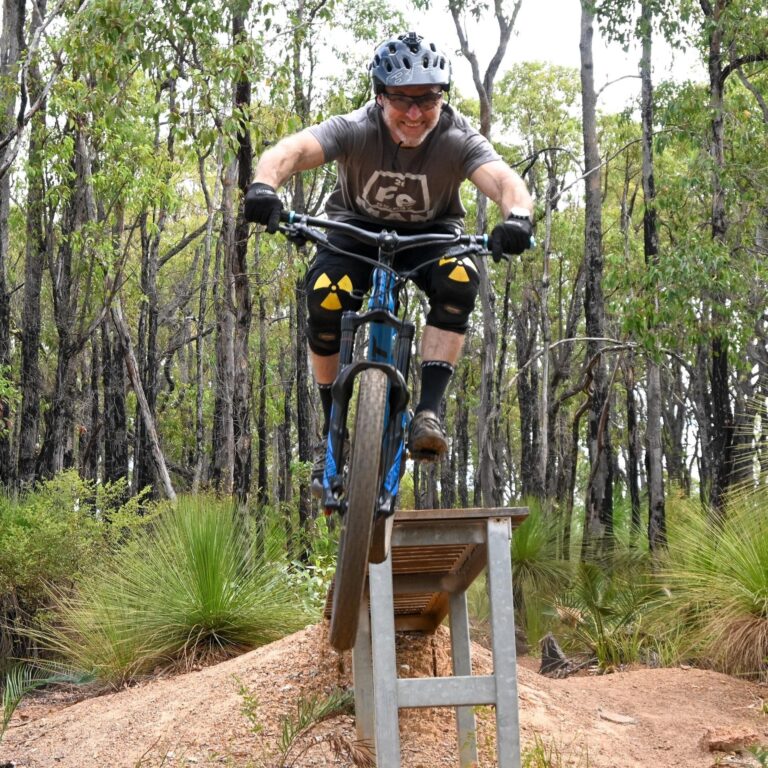
Roach formerly owned a mountain bike tour enterprise so he has a special interest in the offroad space. Like many close to it, he acknowledges trail maintenance is an area where the State “could do better”.
“I’ve got this motto which goes on along the lines of, if you build it, they will come. If you maintain it, they will keep on coming,” he said.
“There can be an issue with funding working on annual cycles. So there’ll be money to build a trail, but very little money for ongoing maintenance. It can also be complicated by the fact a trail may pass through multiple local government areas. Some trails haven’t had a shovel touch them for three years.”
‘Trails trusts’ were one model successfully employed in the US and other parts of the world, where a Trust would be responsible for a trail’s upkeep through a mixture of volunteer and paid work, and negotiating with relevant parties.
“If you do it that way, you can sort of skirt around that issue of having a trail that might go through three local government areas, some in National Parks, some in the State Forest.”
Roach is encouraged by signals coming from the State Government’s Department of Biodiversity, Conservation and Attractions (DBCA) to tackle the ‘maintenance issue’.
“The DBCA is certainly looking at the different models around the world and going, ‘what model can we use in WA?’ to make sure the trails are being appropriately maintained.”
The 2026 Gravel World Championships: all eyes Nannup
2026 is a big year for gravel with the World Championships coming to WA for the first time in October, and the gravel scene burgeoning from recreational riders to racers.
“I think gravel is just going to keep growing in WA for a few reasons. We’ve got a big road cycling race scene already, and a lot of people transition from there, probably more so than coming in from the mountain biking base. SeVen Gravel in Nannup has a long history in WA now and that organisation has obviously been integral in bringing the World Champs here.”
“Thirdly, we’ve got a lot of gravel, a lot of great gravel – there really is endless kilometres of great gravel riding out there, even around Perth. You can usually find some pretty big climbs, and some really good gravel riding wherever you go really.”
Roach welcomed the idea of a gravel event in the Perth Hills, if the right route could be sourced.
“There are issues with access to great gravel roads in water catchment areas and other restricted areas [in the Perth Hills], but I actually think if we work with the government authorities, if we had the right support in the right places, we could find a way through those differences.”
More events, more often?
Given WestCycle’s current strategic plan is headed by the slogan ‘making WA an amazing place to ride’, Roach said such events had a lot to offer the State.
“I think that we could potentially do a lot more with the tourism authorities. We can use our data skills and our knowledge of the space to put a good case to government, working with event organisers and working with Tourism WA as to why there should be events – races, fondos, participations – all sorts of events. There’s a real scope for us to promote more events that will bring more people into WA and celebrate riding in WA.”
Pumping up riding clout
Is WestCycle sufficiently influential in the halls of government to generate the best outcomes for WA’s riding communities?
For Roach good relations with ministers and members of parliament is one thing, “but it’s not just meeting with politicians, it’s also about meeting with public servants, like senior public servants, and to get things done with government.”
“We can meet with the minister and that’s great, but it’s knowing and understanding the senior public servants and what they’re trying to achieve, and what their constraints are. That’s probably more effective, and we’ve got really good networks in the WA state government – probably a lot better than people think.”
The future of eMobility
Roach said the WA Parliamentary Inquiry into eMobility safety that in December delivered 33 recommendations, was mostly sensible, noting the majority of sector issues were around the illegal use of e-scooters and e-bikes.
“I think eRideables and e-bikes are great – I’ve got an e-bike,” he enthused. “Every time I see an eRideable going along the cycle path, I go, that’s one less car on the freeway. Whether it’s someone on a bike or someone on an eRideable, it’s better for the environment. It’s better for other road users, for car users, it’s cheaper from an infrastructure perspective. There’s a real future there. The challenge is basically just to get people to follow the law.
“If you unpick the majority of the serious incidents the issue is usually illegal operation. So I think that policing, import, regulation and education of users and their families are three things that we could do, and if we could do all three of those successfully, I think we would make eRideables much safer, and I think it’d be great if we got more people on them.”
Why ride? Acting, belonging, committing…
Roach’s own riding journey spans mountain biking competitions, triathlons to being a dad and supporting their riding, to just riding for the sheer pleasure.
“Now as much as anything, it’s a social thing. I just like going for a ride with my mates or going for a ride with my son…it’s social, it’s fitness, of course, but as much as anything it’s just the old ‘act, belong, commit.’ You’ve got to act on the bike, and you’ve got belong if you go out with a group of friends. So I think it’s for me these days, it’s social interaction and engaging with people is the most satisfying.”