
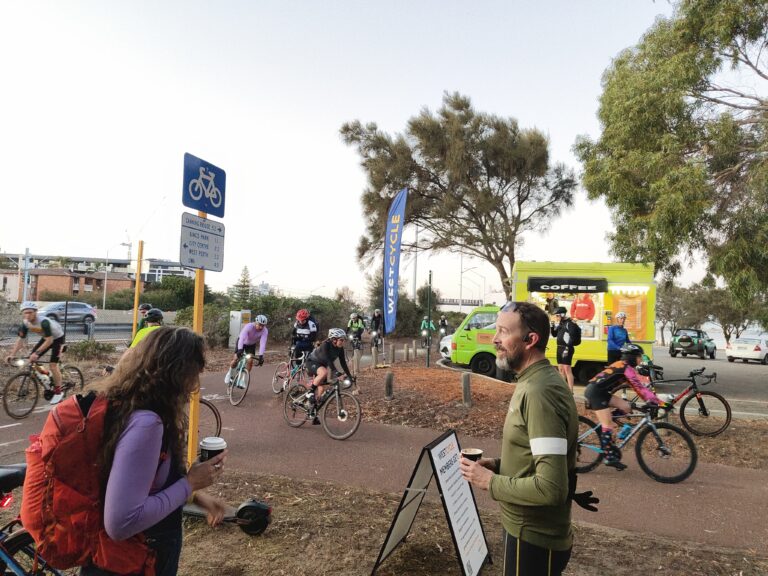
Field Trip: Hilton Shops
When we advocate for safe places to ride, we don’t just mean more bike paths. We want WA to be an amazing place to ride, and this includes the local shops. The corner of South Street and Paget Street in Hilton has some nice examples of ways local governments can upgrade streets to make it easier for everyone to ride to the local shops.
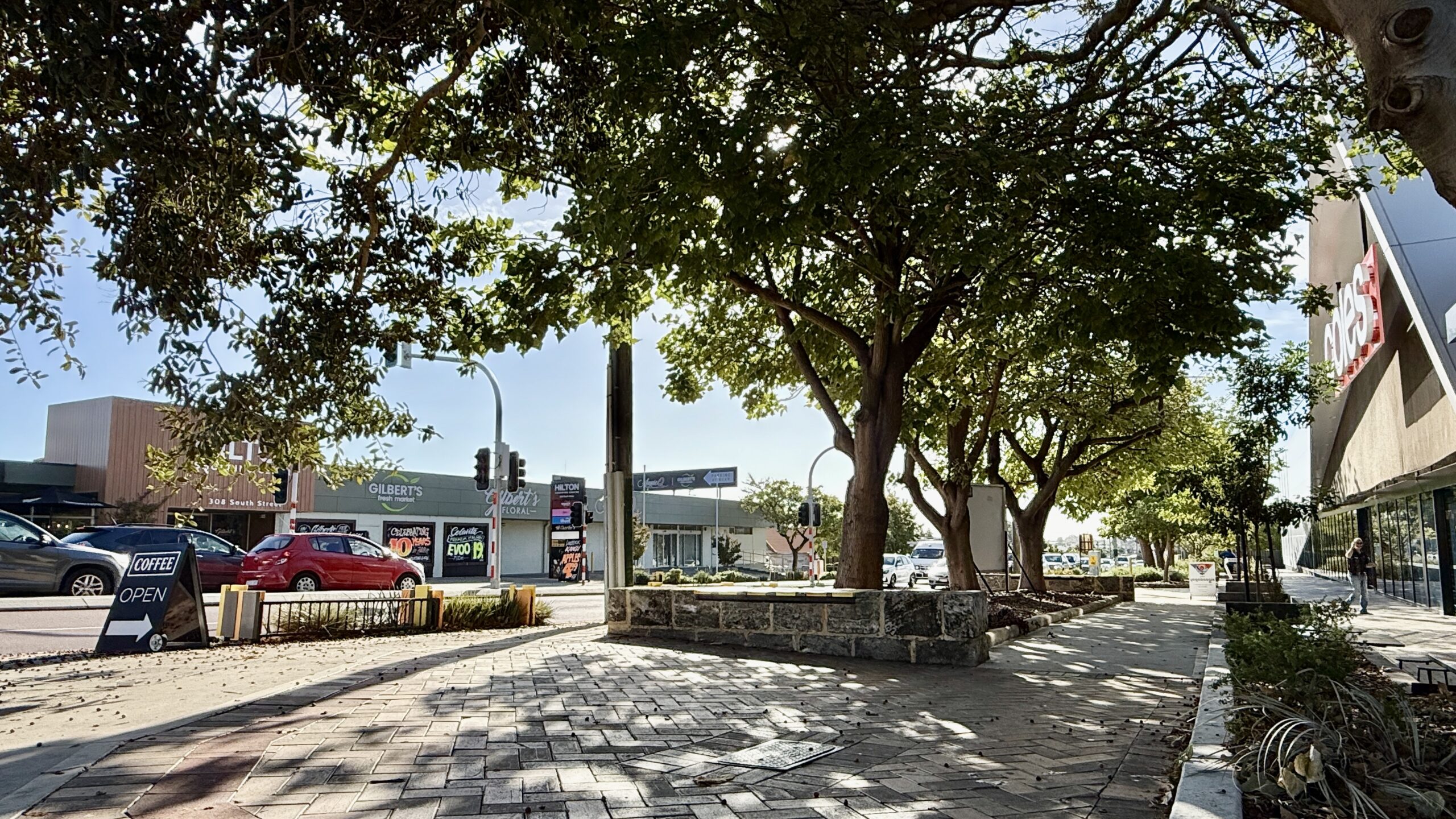
Wide footpaths provide space for people to walk, arrive on their bike, and mill around chatting. The dappled shade, places to sit, and bike racks at each supermarket entrance are welcoming to everyone, no matter how they got there.
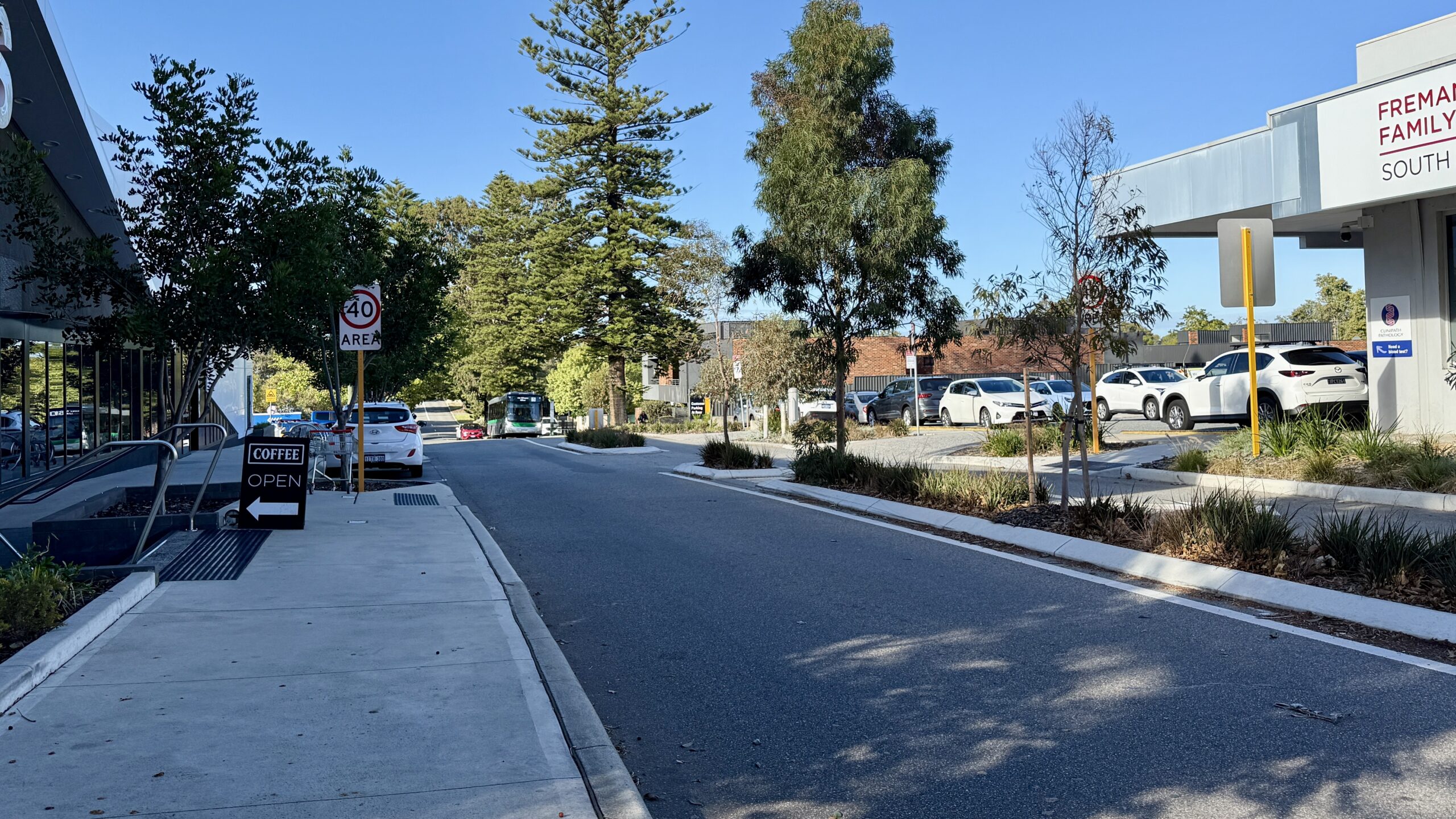
Wide pram ramps and cuts in the median make it easy to cross and access bike parking.
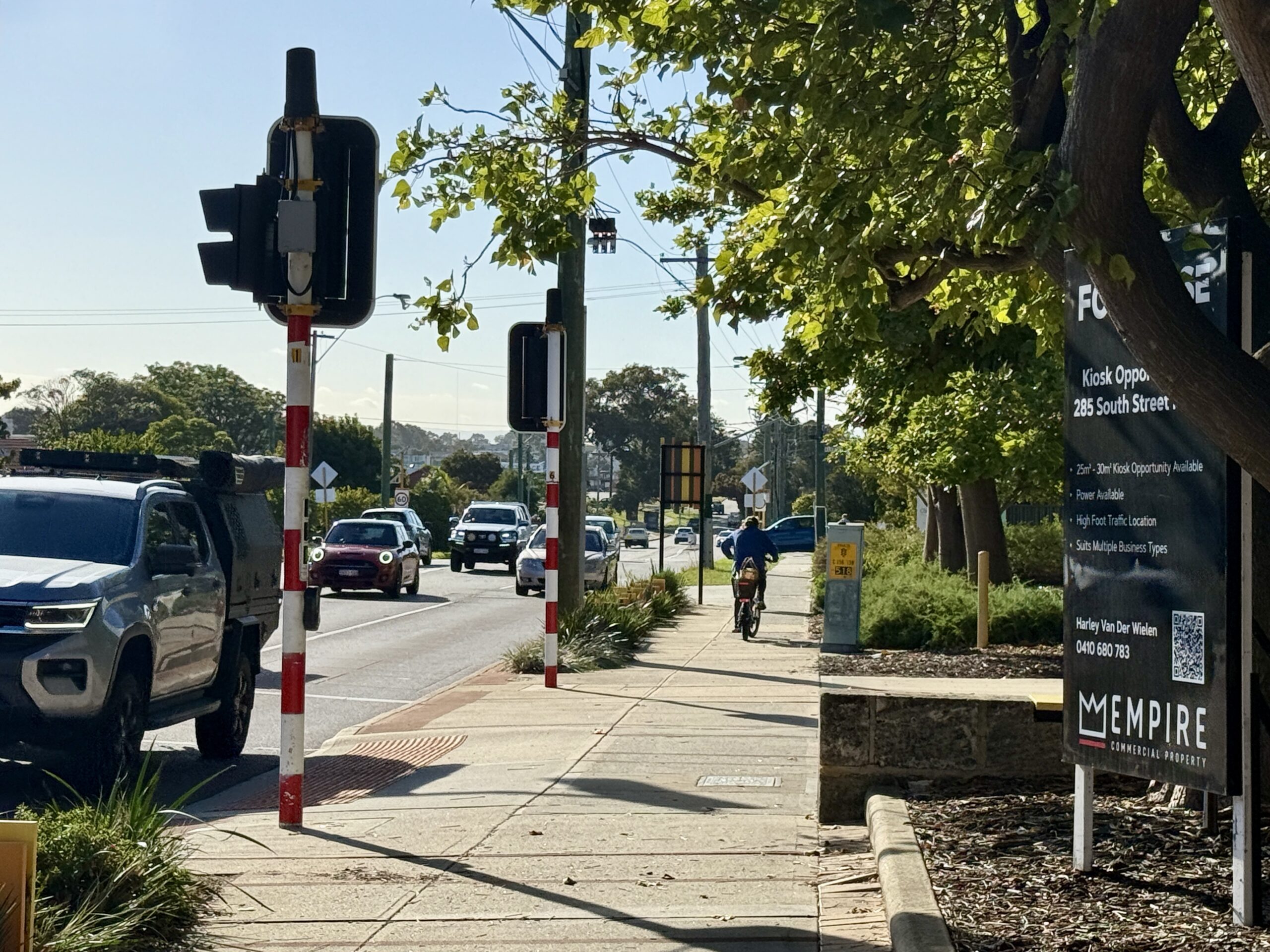
The signalised pedestrian crossing and 40km/h speed limit make it easier to access the other shops and bus stop. Adding more places to safely cross further down South Street, and expanding the 40km/h zone to include O’Connor, would help more locals use a bike for their daily trips.
Better paths: Shade and shelter
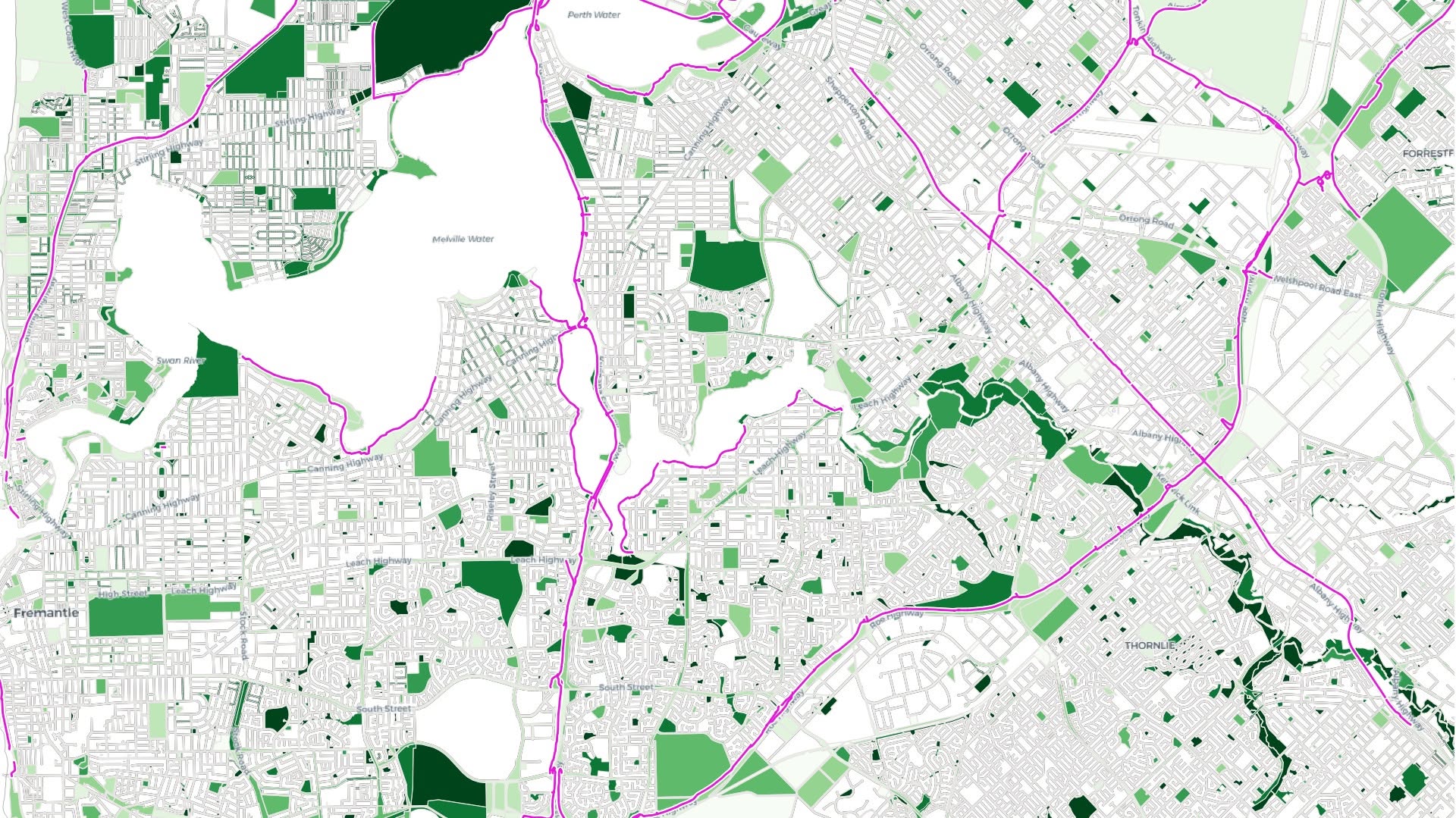
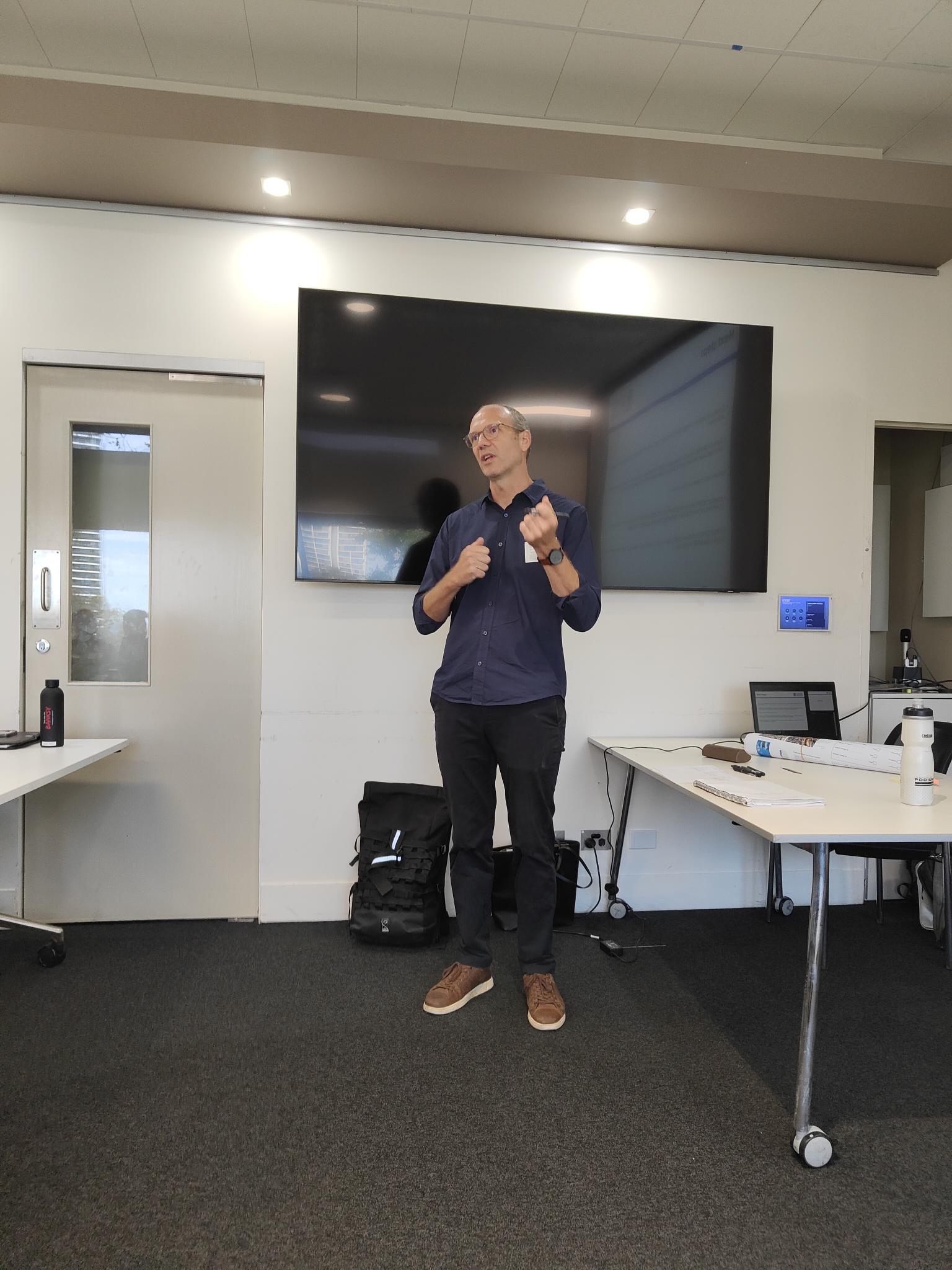
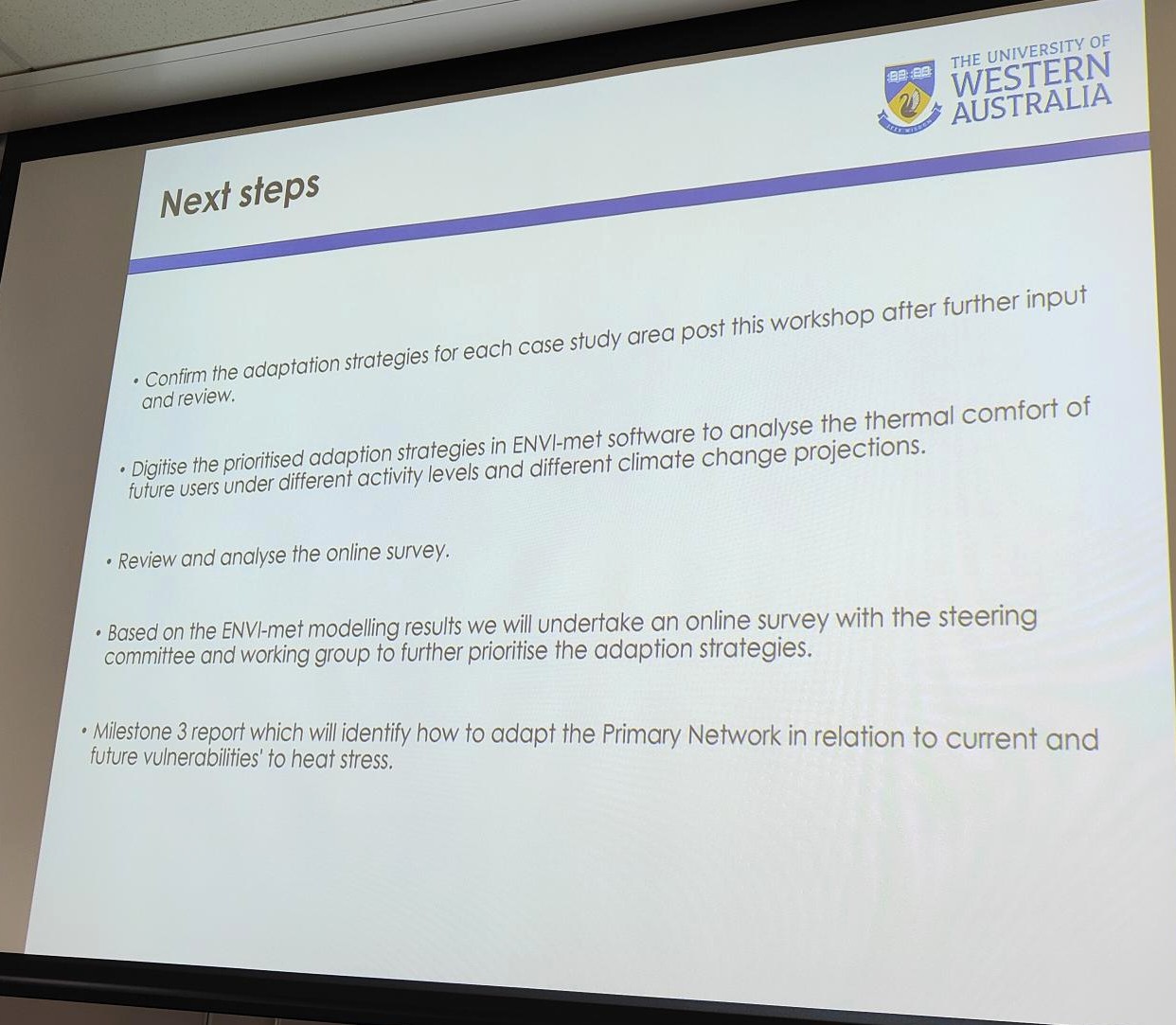
This month, as a steering committee member, WestCycle attended a workshop facilitated by the Australian Urban Design Research Centre (AUDRC) for their climate resilient paths project. For a few years now WestCycle has strongly advocated for amenities along the Principal Shared Path network, often after arriving at stakeholder meetings slightly sunburnt and dehydrated from the ride. Our suffering seems to be making an impact, and we have been happy to see state government departments funding research projects like this. Hopefully we don’t have to wait too many more summers before we see shade, drink fountains, and toilets appearing alongside the paths.
Toward safer paths
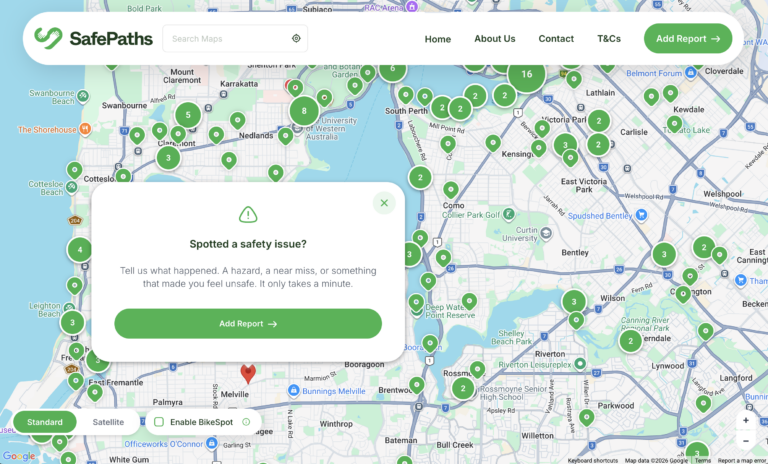
WestCycle is calling on our riding community to share their experiences of path safety via an online reporting tool at safepaths.au. Your reports help researchers identify high-risk locations, problem behaviours, and gaps in current path design.
The SafePaths tool, part of a project led by a team from the Planning and Transport Research Centre (PATREC) at UWA, is a proof-of-concept for riders to report safety concerns and builds an evidence-base that can be used to inform path design and maintenance.
WestCycle has been working with the research team to shape the project’s methodology and outputs, so that the findings are as useful as possible for improving path safety.
We’re hoping the tool will continue beyond the research project and become a permanent resource, connecting path users’ safety concerns directly with the agencies best placed to act on them.
Where can I ride my e-scooter?
Knowing where it’s legal to ride your eRideable can be confusing. We’ve compiled some examples of street types and paths to help you. You can find them here.
We support Road Safety Commission Western Australia work to modify some of these rules to make it simpler and safer to get around on e-scooters.
Worth reading: Beyond physical activity guidelines
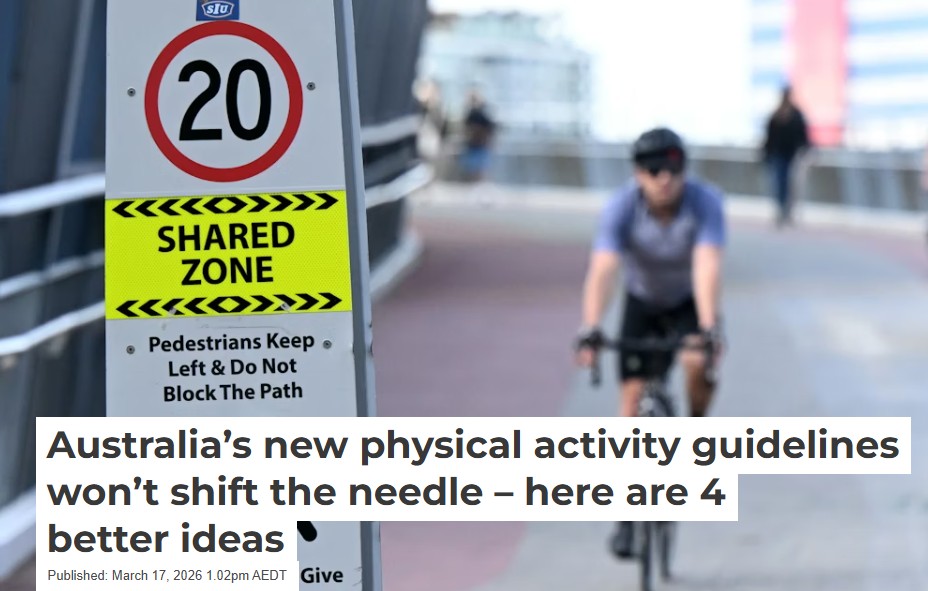
The Australian Government just released new physical activity guidelines for adults, the first update in a decade. In this article from The Conversation, the authors (including WestCycle Advisory Panel member, Tepi McLaughlin) argue that decades of evidence suggests simply telling people to be more active hasn’t worked. Instead, they suggest four policy ideas that governments could put into action to make it easy and safe for everyone to walk or ride for everyday trips.
As always, Tepi’s articles are full of links to interesting papers and juicy stats.
WA State Budget Submissions
The 2026-2027 WA State Budget is due to be released in early May. While we didn’t put in a formal submission this year, we made several recommendations to the Government in our submissions and response to the Parliamentary Inquiry that we hope will be considered in the Budget development.
WALGA
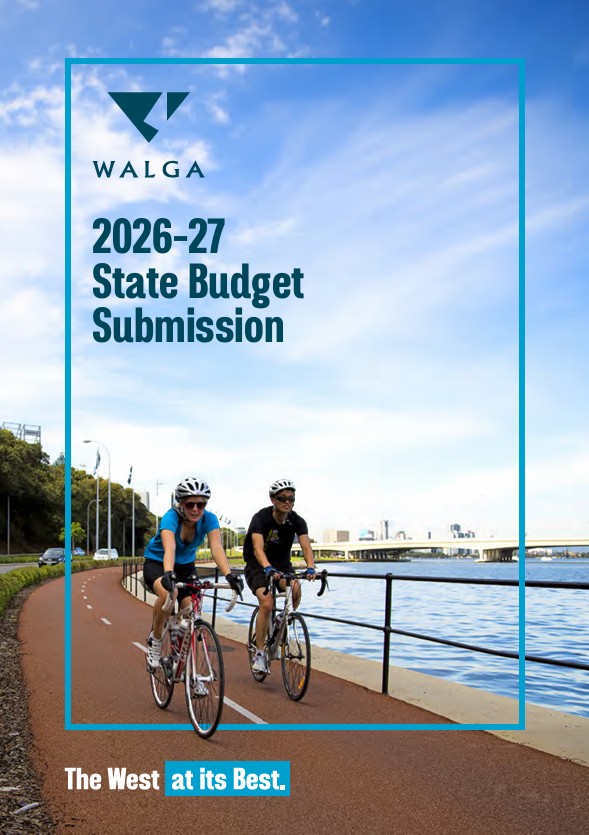
The influence of WALGA’s active transport team on their State Budget Submission is great to see, with a big focus on making the road network safer for kids and fairer for everyone. They’ve requested $12 million over four years to convert children’s crossings to signalised pedestrian crossings at five priority locations on dangerous, busy roads, and another $5 million a year for local governments to spend on safety improvements just on streets around schools so more kids can walk and ride. WALGA also asked that $4 million a year be spent putting in pedestrian crossings, noting the importance of investing in infrastructure that serves the entire community. Finally, they requested $20 million a year be made available to close gaps in the Long Term Cycle Network as “many users are unable to safely reach destinations due to missing links”.
RAC
Similarly, RAC’s transport policy team has done solid work ensuring active transport featured prominently in their budget submission. RAC calls for the Government to establish, fund and resource a $5 million per year program for local governments to review their road network and implement safer speed limits. This is a practical step toward creating safer environments for riders. In addition, they say a significant upscale is needed in investment in active transport, calling for 10% of the transport capital budget should go to active transport infrastructure (rather than the measly 1.3% it is currently).
Road related expenditure in WA last year was close to $1.7 billion, so that sounds like a good start to us.
Coming up
Free Webinars
Wednesday 22 April 2026, 9am iMOVE: Planning for successful cycling infrastructure: Bendigo case study
Thursday 30 April 2026 11am Austroads: Travel to School Guidelines